
Body composition scan for fitness and training
Measuring training progress – comparing body fat and muscle mass objectively
If you lose fat and build muscle at the same time, the scales may show little change. Your body composition, however, can still change significantly.
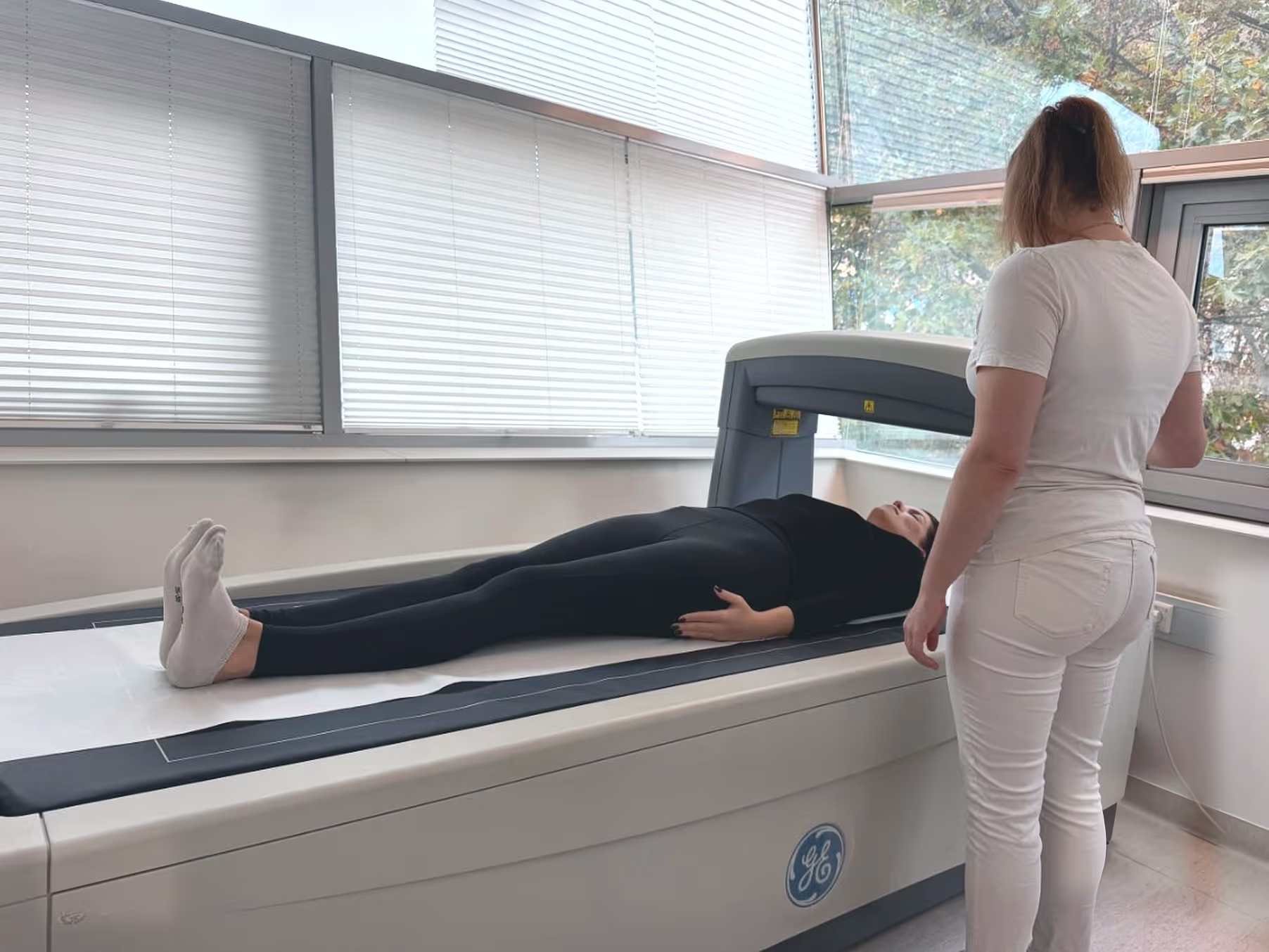
Measuring training progress: what the body composition scan helps with
Starting training
A baseline value for fat mass, lean mass and their distribution – before anything changes.
Muscle building
Is lean mass in the arms, legs and trunk increasing? The regional analysis shows this separately.
Strength training
The left–right comparison is also visible, for example after an injury or with one-sided strain.
Endurance training
Document changes in body fat and lean mass over the course of a training phase.
Weight loss with training
Check whether weight loss is mainly fat loss, with lean mass preserved.
Standardised follow-up measurements
Measurements on the same device and under the same conditions make progress comparable.
Scales, BIA or DEXA – what's the difference?
Body weight and BMI
They show mass and the ratio of weight to height, but don't distinguish between tissue types. Muscle gain and fat loss can cancel each other out on the scale.
Body fat scales and BIA
They estimate body composition from electrical measurements and calculation models. The result depends, among other things, on hydration. For everyday use and under consistent conditions, they can be useful.
DEXA body composition scan
It provides a medically established, regional analysis of fat mass and lean soft-tissue mass. DEXA is considered a precise and highly reproducible medical reference method – though it, too, has measurement variation and is not infallible.
What DEXA does not measure
- Muscle strength
- Endurance
- Training quality
- Athletic performance
Lean soft tissue mass is an approximate measure of muscle mass. How strong you are or how much stamina you have is shown by performance tests during training – not by the body composition scan.
Comparable conditions
Follow-up measurements are most meaningful on the same device, at a similar time of day, after fasting for 3 hours and with an empty bladder – and not straight after an intense training session.
Baseline scan and follow-up scan
You choose the interval until the follow-up scan depending on training volume and goal. A single scan can be booked without a referral; a baseline and follow-up scan is also available as a package.
The body composition scan is a private service that you can book without a referral, and costs €70 per scan, the package of two body composition scans (initial and follow-up scan) €130 (both scans within 2 years). Bone density scan and body composition scan at one appointment: 120 euros. You can currently arrange the package by phone. Please allow around 20 minutes for your appointment.
About the medical body composition scan Competitive sport: bone health and RED-S
Relevant health goals
Medical sources
- International Society for Clinical Densitometry (ISCD): Official Positions – Adult, 2023 edition. View source (opens in a new window)
This page is for general information only and does not replace medical advice.