
Mammogram in Graz – for your breast health
No referral needed · with e-card · every 2 years
Breast cancer screening made simple: women aged 45 to 74 can come for a screening mammogram every two years without a referral, using their automatically activated e-card.
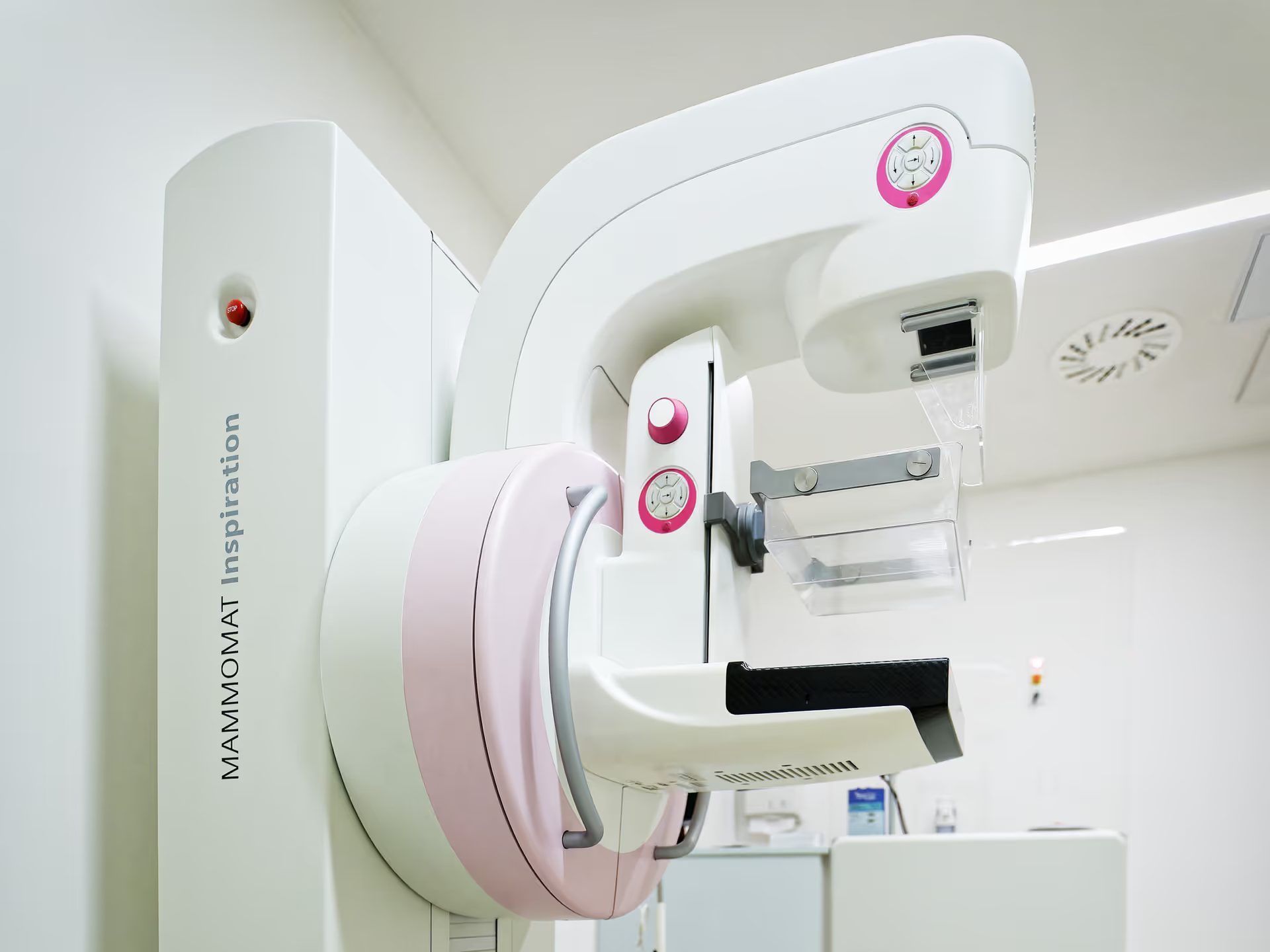
Breast cancer screening programme
Breast cancer screening without a referral
Women aged 45 to 74 can take part in the Austrian breast cancer screening programme and come for a screening mammogram every two years. Your e-card is automatically activated for this. No referral or reminder letter is needed for the examination – simply book an appointment and bring your e-card.
Official information about the programme: www.frueh-erkennen.at (opens in a new window)
What is a mammogram?
A mammogram is an X-ray examination of the breast, also referred to as mammography.
It is used for screening – in women without symptoms – and for diagnostic work-up when a change in the breast has been noticed or found during an examination.
Like any examination, mammography has its limits: a normal result cannot rule out breast cancer with complete certainty. So please also keep an eye on your breasts for changes between appointments.
Screening or diagnostic work-up
40–44 years
Women, by personal choice
Women aged 40 to 44.
Registration according to the current programme rules – via the service line 0800 500 181 or at www.frueh-erkennen.at
45–74 years
Women in the programme
Women aged 45 to 74.
The e-card is automatically activated. Without a referral, every two years – make an appointment and bring your e-card.
from age 75
Women, by personal choice
Women aged 75 and over.
Registration according to the current programme rules – via the service line 0800 500 181 or at www.frueh-erkennen.at
- Each dot: a possible screening appointment, every two years
- Dashed: participation after registration
Schematic illustration – Breast cancer screening is intended for women without symptoms.
Screening mammogram
For women without symptoms, as part of the breast cancer screening programme – no referral needed, just your e-card.
Diagnostic mammography
If you have symptoms, an abnormal finding, or a particular risk situation, such as a family history, a different path is needed: targeted work-up with a referral from your doctor. You can arrange this appointment by phone. This is sometimes also called a “curative mammogram” – meaning a mammogram for diagnostic work-up rather than screening.
Getting symptoms checked quickly
Have you noticed a new lump, discharge from the nipple, dimpling of the skin, or any other new changes in your breast? If so, please don't wait for a routine screening appointment. Get these symptoms checked by a doctor quickly.
Breast cancer screening is intended for women without symptoms.
Contact for symptoms
For a mammogram due to symptoms, you need a referral from your doctor. Please arrange the appointment by phone rather than through online booking: 0316 840 90 50
How the mammogram works
Check-in
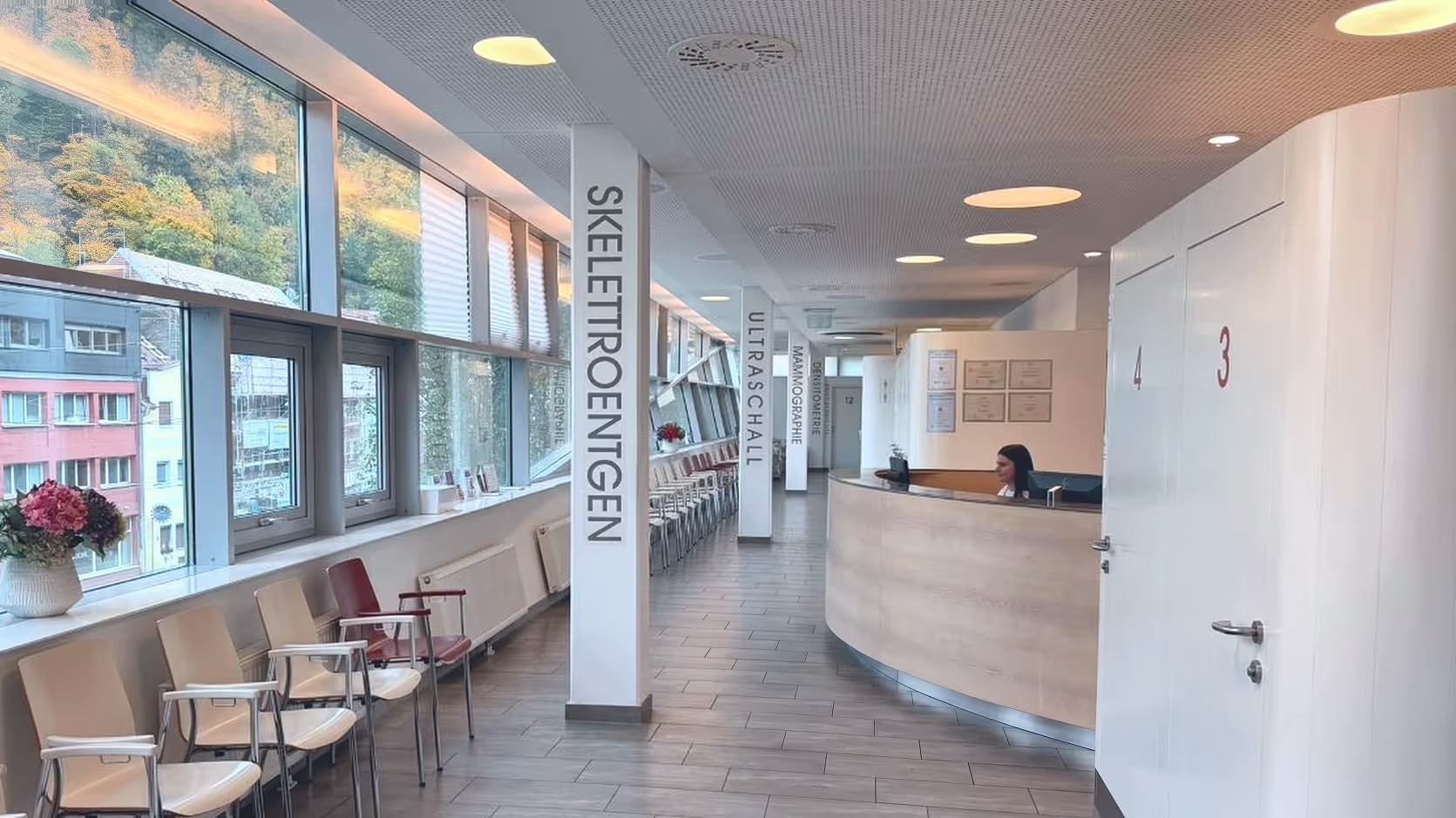
You check in at reception with your e-card.
Preparation at the practice
You undress from the waist up for the images. Our team will explain the process and answer your questions.
Positioning the breast
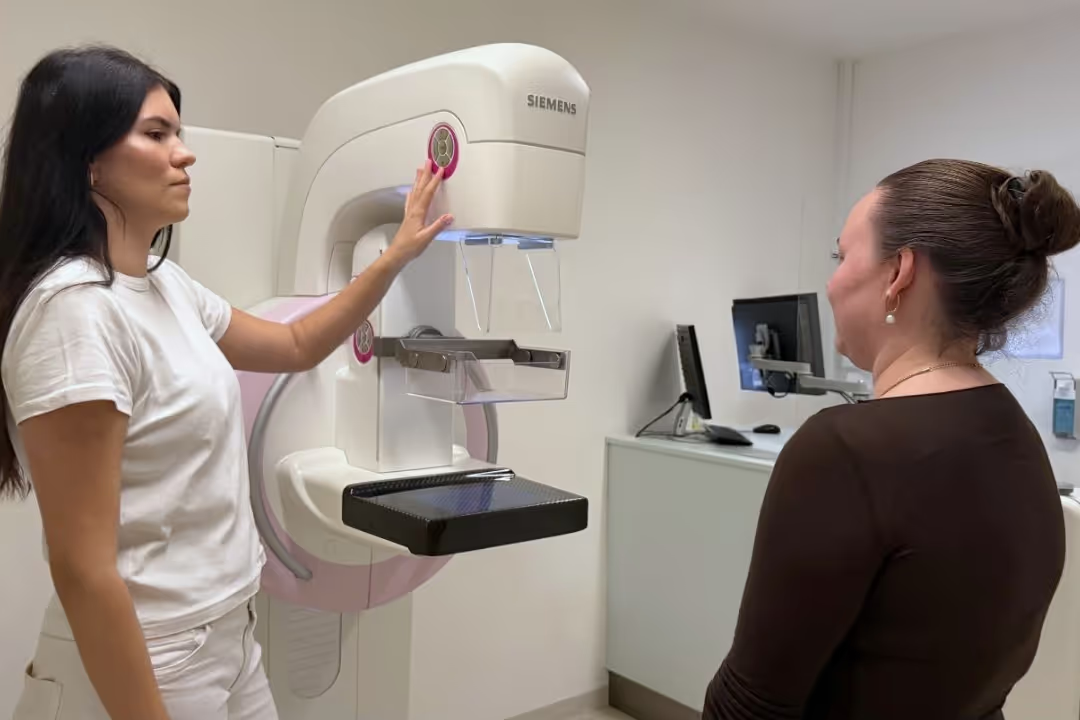
The breast is positioned on a support plate – each side is usually imaged from two angles.
Brief compression
While the image is being taken, the breast is briefly compressed between two plates. This produces clear images and keeps the radiation dose low.
Reporting
The images are assessed by specialists in radiology. In the screening programme, every mammogram is independently reported by two radiologists.
Receiving your results
Your images are archived digitally and are quickly available to your GP or specialist. Your images and reports are also available via ELGA and online at portal.marc.at. The screening mammogram report can also be accessed via ELGA.
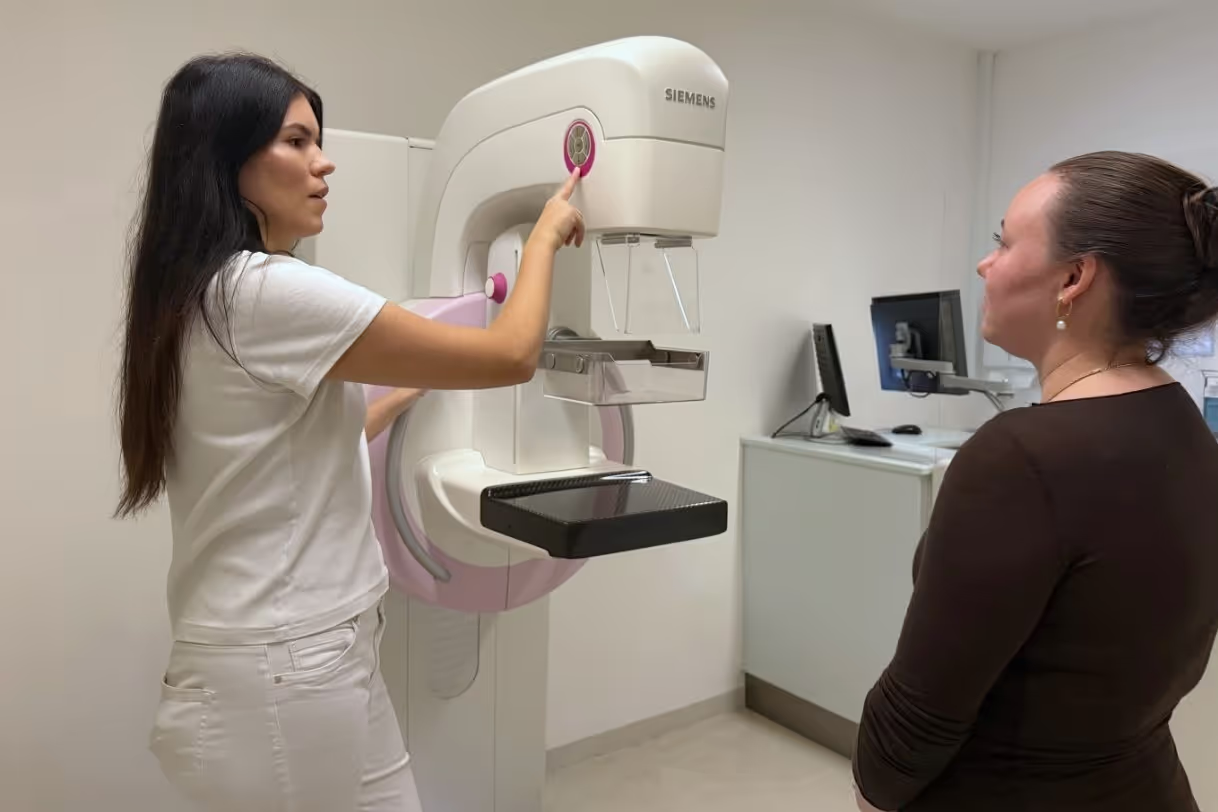
Preparation
- On the day of your examination, please avoid using deodorant, powder or body lotion on your breasts and underarms.
- Please bring any previous images and reports, unless we already have them.
- Please let us know about a possible pregnancy when booking your appointment.
- Bring your e-card.
Breast ultrasound
- Mammography and ultrasound provide different information.
- Depending on the findings and breast tissue, an additional ultrasound may be useful.
- In screening, ultrasound does not generally replace mammography.
- Whether an ultrasound is needed is assessed by a doctor.
Dense breast tissue
The breast is made up of glandular, connective and fatty tissue. Breast tissue is described as dense when the proportion of glandular and connective tissue is high. This is common – especially in younger women – and is not an illness.
Dense tissue can make mammograms harder to assess. Whether an additional examination makes sense depends on your personal situation and is decided individually by a doctor.
Frequently asked questions about mammograms
Not for the screening mammogram as part of the early detection programme: women aged 45 to 74 without symptoms can attend without a referral. If you have symptoms or need further assessment of an abnormal finding, a referral is required; please book your appointment by phone.
Yes. For women aged 45 to 74, the e-card is automatically activated for the screening mammogram. Please bring it to your appointment.
In the early detection programme, every two years.
No. The reminder letter is not required for the examination – your e-card is enough.
You can register for the early detection programme according to the current programme rules – via the service line 0800 500 181 (Mon–Fri 8:00–17:00) or at www.frueh-erkennen.at.
Women aged 75 and over can also register according to the current programme rules – via the service line 0800 500 181 (Mon–Fri 8:00–17:00) or at www.frueh-erkennen.at.
Don't wait for a regular screening appointment. Have any new changes in the breast – such as a palpable lump, nipple discharge or skin dimpling – assessed by a doctor promptly. Screening is intended for women without symptoms.
For the X-ray, the breast is briefly compressed. This can be uncomfortable and sometimes painful, but it only lasts a short moment each time. If your breasts are tender before your period, an appointment during or in the week after your period is often more comfortable.
Yes, a mammogram is generally possible with breast implants.
For example, with dense breast tissue or to investigate a finding further. Ultrasound and mammography provide different information; whether an ultrasound is needed is assessed by a doctor.
The breast consists of glandular, connective and fatty tissue. We speak of dense breast tissue when the proportion of glandular and connective tissue is high. This is common and not an illness, but it can make the mammogram harder to assess.
Your e-card, any previous images and reports (if we don't already have them) and – if you have one – your referral. No referral is needed for the screening mammogram.
Your images are assessed and archived digitally and are quickly made available to your GP or specialist. Your images and reports are also available via ELGA and online at portal.marc.at. The report from the screening mammogram can also be accessed via ELGA.
Practice, directions and guide
Health goal: women's health and menopause
Programme information: www.frueh-erkennen.at (opens in a new window)
Book a mammogram appointment in Graz
Would you like to arrange an appointment for breast cancer screening? Women aged 45 to 74 generally don't need a referral for the screening mammogram. Book your appointment and bring your activated e-card.
Opening hours: Mon – Thu 08:00–17:00, Fri 08:00–13:00
Examinations and consultations with us can be conducted in German or English.