
Venography (phlebography)
Appointment required
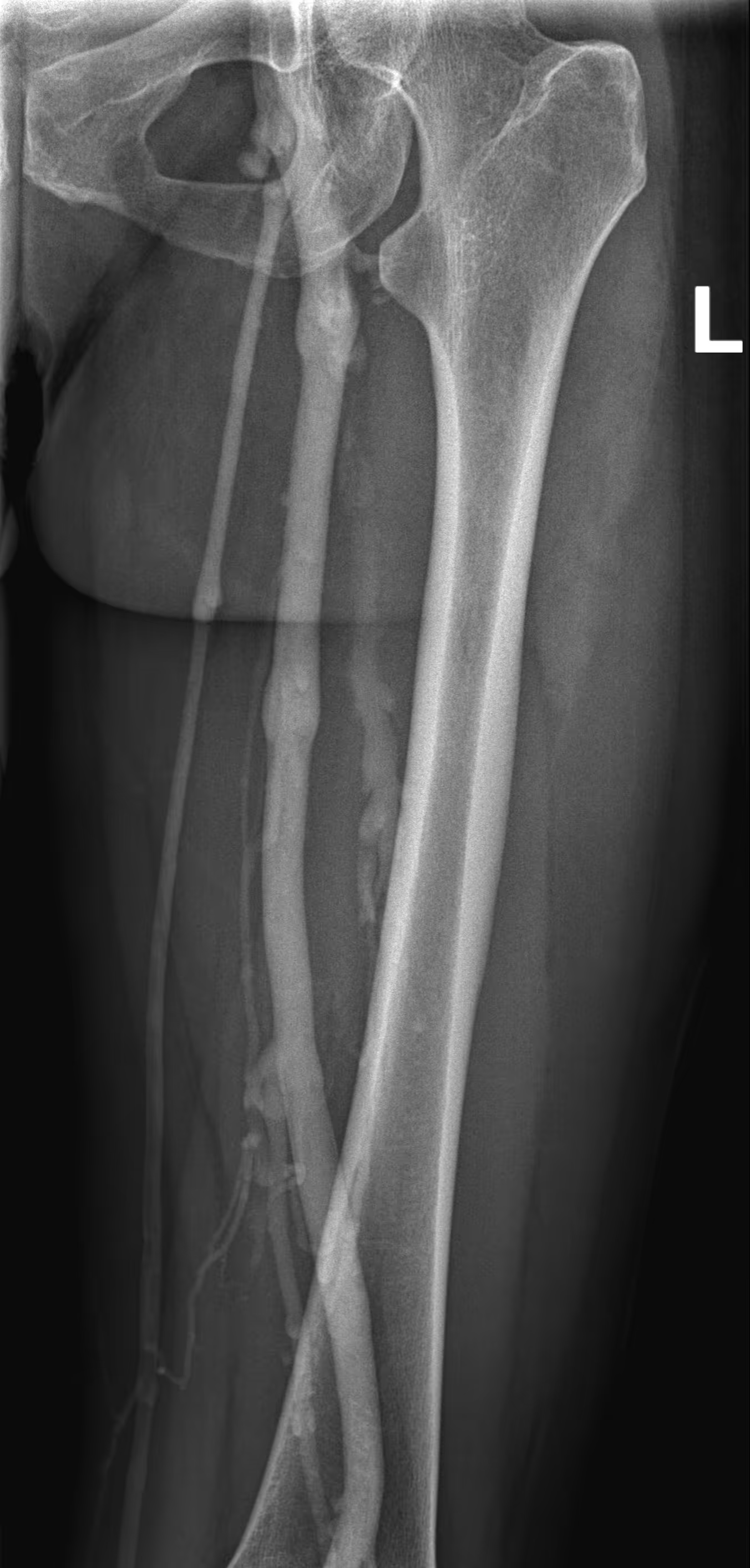
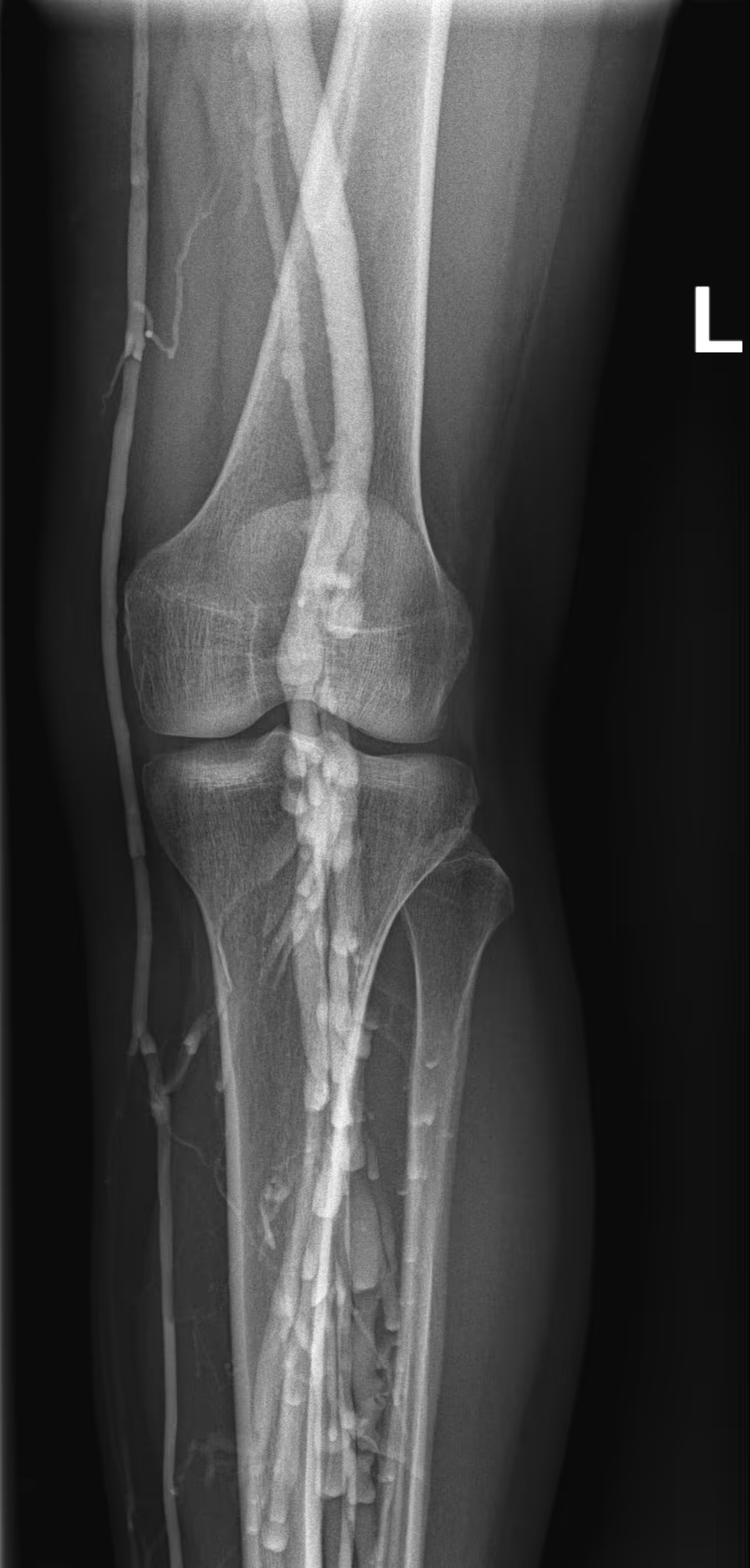
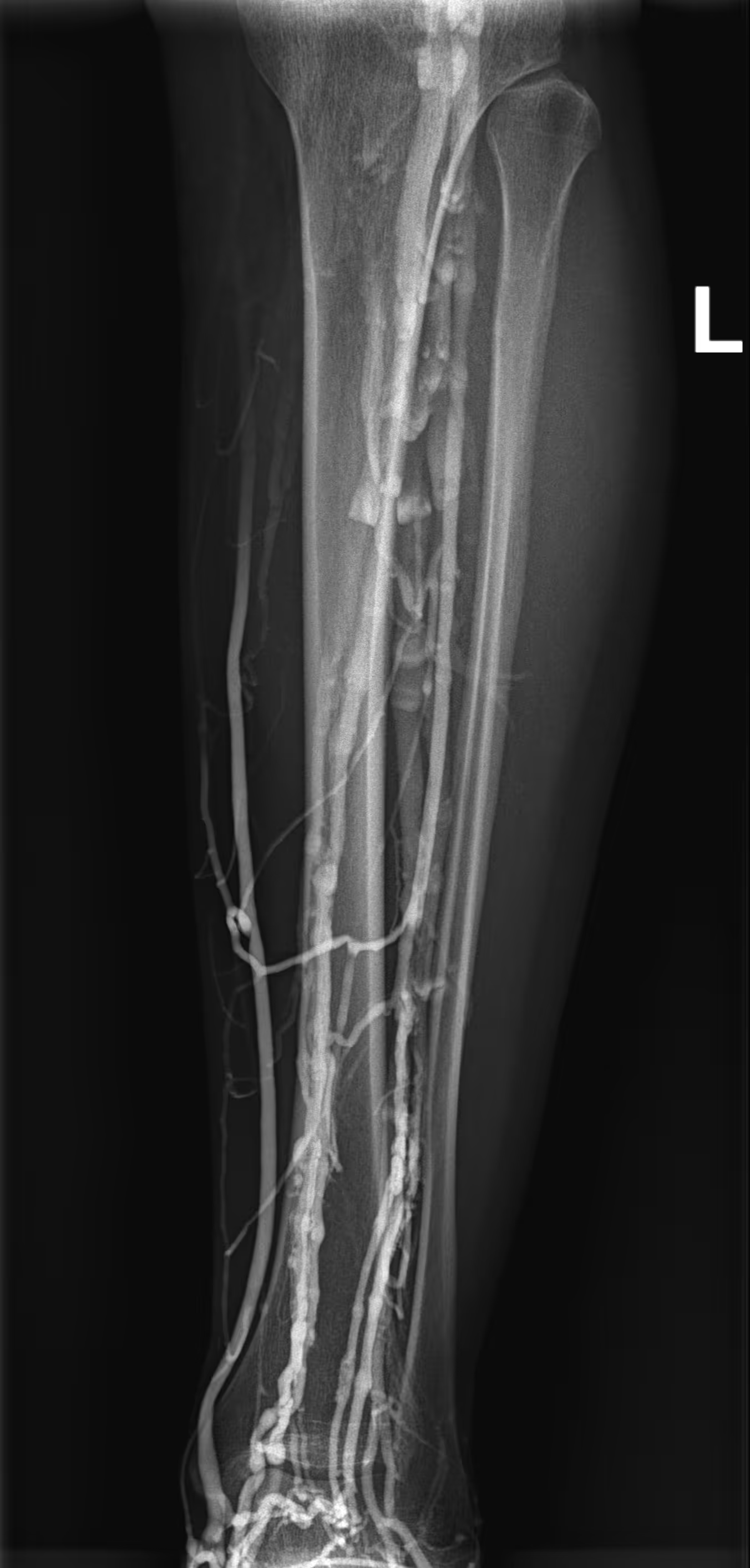
Venography is a vein examination in which a contrast medium is injected into a vein in the area being examined, to assess its condition and position.
Important: This examination cannot be carried out if you have a contrast medium allergy or an overactive thyroid, or if you are pregnant.
When it is used
- Visualisation of varicose veins
- Assessment of the venous valves
- Checking the patency of the deep and superficial leg veins before varicose vein surgery
- Detecting or ruling out blockages of the deep leg veins caused by blood clots (thrombosis)
How the examination works
Vein examinations are usually carried out on the legs, and in some cases on the arms. Both the superficial and deep veins are visualised using contrast media.
The examination begins with a needle puncture on the top of the foot, through which the veins are filled with a contrast medium. Images are then taken from various angles using digital X-ray technology to assess the veins and venous valves.
Venography is also a well-established diagnostic method for preparing for varicose vein surgery and for investigating recurrent varicose veins.
Frequently asked questions about venography
Venography is an examination of the veins using contrast medium. After a needle puncture – usually on the top of the foot – the veins are visualised and assessed from several angles.
To assess the venous valves in venous insufficiency, and, in rare cases, to check whether the leg veins are open, in order to detect or rule out a thrombosis.
If you have a known kidney condition, we need your current creatinine (or GFR) level; if you have a thyroid condition, we need your TSH level. Please get these from your GP before the examination. Venography is only carried out by appointment, arranged in advance by phone.
A planned venography cannot be carried out if you have a known allergy to contrast medium, an overactive thyroid, or are pregnant. If in doubt, please talk to us before the examination.
Important information
Preparation
- If you have a known kidney condition, we need your current creatinine (or GFR) level.
- If you have a thyroid condition, we need to know your TSH level.
- In both cases, please contact your GP before the examination.
- An appointment is required: please book by phone.
What to bring
- Referral (paper or digital)
- Current e-card
- Any previous images for comparison